
Quick answer: Custom balustrades generally fall into three popular categories — glass (for uninterrupted views), powder coated metal (for colour and coastal durability) and wire (for a minimalist, budget-friendly finish). The right choice depends on your view, your climate, your maintenance appetite and your budget, not just your style preference.
Renovating a deck, staircase or balcony almost always comes down to one decision that gets put off until the last minute: what to do about the balustrade. It’s easy to treat it as an afterthought, yet it’s one of the most visible elements of any elevated space, and the wrong choice can undercut an otherwise beautiful build. A poorly matched balustrade can make a brand-new deck look dated within a few years, while the right one quietly disappears into the design and lets the rest of the space do the talking.
Custom balustrades give homeowners and builders the flexibility to match material, colour and spacing to the specific site — coastal exposure, sightlines, budget and compliance requirements all play a role, and no two properties weigh those factors the same way. A hillside home chasing a valley view has completely different priorities to a compact courtyard renovation on a tight budget. This guide breaks down the three most common balustrade materials, compares them side by side, and helps you work out which one actually suits your project.
What Are the Main Types of Balustrades?
Before comparing performance and cost, it helps to know what you’re actually choosing between:
- Glass balustrades — toughened or laminated glass panels, either fully frameless or held with slim posts, prized for maximising views and light.
- Powder coated balustrades — aluminium or steel framing finished with a baked-on powder coating, available in a wide colour range and built for durability.
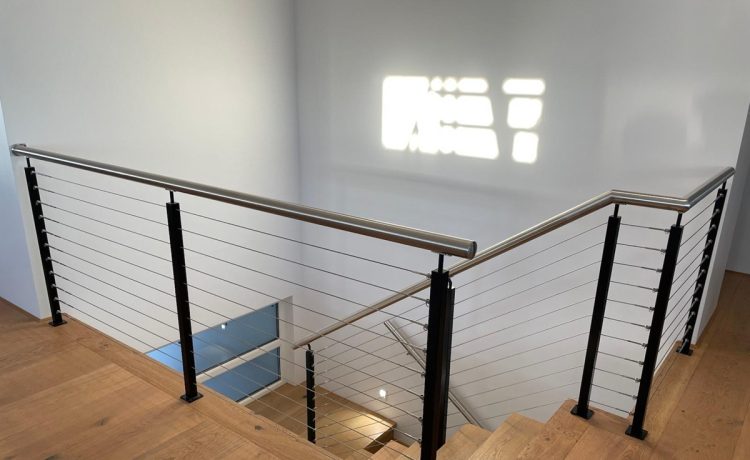
- Wire balustrades — stainless steel cables tensioned horizontally (or occasionally vertically) between posts, offering an open, minimalist look at a lower material cost.
Each has a genuinely different personality, and each suits a different combination of budget, climate and design brief.
Glass Balustrades: The Sleek, View-Maximising Option
If the whole point of your deck or balcony is the view — ocean, bushland, a pool, a city skyline — glass is usually the material that wins. A well-installed set of glass balustrades creates a barrier that’s almost invisible from a distance, which is exactly why they’re so popular on elevated decks, pool surrounds and staircases in newer builds.
The trade-off is maintenance and cost. Glass shows water spots, salt residue and fingerprints more visibly than other materials, so homes near the coast or with young families should budget for regular cleaning. Toughened glass is also a specific compliance category in its own right — for pool areas in particular, the glass needs to meet impact and fixing requirements under Australian safety standards, so it’s worth confirming compliance documentation with your supplier before installation, not after.
Cost-wise, glass typically sits at the premium end of the balustrade spectrum, largely due to the glass itself and the precision required for frameless or semi-frameless fixing systems. Frameless designs — where the glass is held by a channel or spigot fixings hidden below deck level — give the cleanest look but demand the highest-spec glass and the most precise installation, since there’s nothing else holding the barrier together. Semi-frameless systems, which use slim vertical posts between panels, cost less and are more forgiving on uneven substrates, while still keeping most of the view open. For a design-forward renovation where the view is non-negotiable, either option is usually worth the investment.
Powder Coated Balustrades: Colour, Durability and Coastal Resistance
Powder coated balustrades — usually aluminium framing with vertical or horizontal infill — are the workhorse option for Australian conditions. The powder coating process bakes a durable, UV-stable finish onto the metal, which resists fading, chipping and corrosion far better than standard paint. That matters in a country where balustrades spend their whole life outdoors in harsh sun and, for a huge proportion of the population, salt air.
The real advantage of powder coated balustrades is customisation. Because the coating is applied after fabrication, you can match almost any exterior colour scheme — heritage homes often go with a Colorbond-matched finish, while contemporary builds lean toward matte black or graphite. This makes powder coated balustrades a favourite with builders working to a specific street-facing aesthetic, since the balustrade can disappear into the facade rather than standing out as an add-on. Matte and satin finishes have overtaken high-gloss in the past few years for exactly this reason — they read as part of the architecture rather than as a bolt-on fitting.
Maintenance is straightforward: an occasional hose-down and a check of fixings is usually all that’s required, and a quality powder coat finish should hold its colour for well over a decade in most Australian climates, coastal exposure included. It’s also worth asking about the coating’s UV and salt-spray rating specifically, since not all powder coating is created equal — a marine-grade finish will noticeably outlast a standard architectural grade in beachfront applications.
Wire Balustrades: The Minimalist, Budget-Conscious Choice
Wire balustrades use tensioned stainless steel cables run between posts, and they’ve become the go-to option for anyone chasing a minimalist look without a glass-level budget. Because there’s less material and no large infill panels to fabricate, wire is generally the most cost-effective custom option, particularly for long straight runs like a deck perimeter or a driveway retaining edge.
The look is deliberately understated — horizontal cables read as thin lines rather than a solid barrier, so they suit modern, industrial or coastal-Australian architecture where the goal is to keep sightlines as open as possible without going fully frameless. Vertical wire configurations are less common but increasingly requested for pool areas, since a vertical run generally satisfies child-safety spacing more straightforwardly than horizontal cables, which need much tighter engineering to prevent climbing. Wire balustrades do need periodic tension checks, since cables can loosen slightly over time and through temperature cycling, but this is a simple adjustment rather than a major maintenance job.
One thing to plan for early: gap compliance. Horizontal wire runs need to be engineered and spaced correctly so a young child can’t use them as a ladder — this is a standard requirement across balustrade types generally, but it’s especially relevant for horizontal wire designs and should be confirmed with your installer at the design stage.
Custom Balustrades Comparison Table
Because every project balances the same handful of variables — view, climate, maintenance tolerance and budget — it’s easier to compare all three side by side. Anyone weighing up custom balustrades for a renovation should start with a table like this before committing to a material.
| Balustrade Type | Best For | Maintenance | Relative Cost | Compliance Considerations | Aesthetic |
|---|---|---|---|---|---|
| Glass | Views, pools, modern builds | Moderate–high (cleaning) | Premium | Pool-rated toughened glass; fixing certification | Sleek, near-invisible |
| Powder coated | Coastal exposure, colour-matching | Low | Mid-range | Standard structural/loading checks | Contemporary or heritage-matched |
| Wire | Minimalist, budget renovations, long runs | Low (periodic tension check) | Most affordable | Horizontal gap/child-safety spacing | Industrial, open, light |
No single option is “best” outright — the right call depends on which row of that table matters most for your specific site.
Which Balustrade Type Suits Your Project?
A few rules of thumb make the decision easier:
- Chasing a view? Glass is worth the extra cost and cleaning effort — nothing else gets out of the way of a good outlook quite as well. Think a hillside deck overlooking bushland, or a pool terrace where the water and the horizon are meant to blend together.
- Coastal property or heritage colour scheme? Powder coated balustrades handle salt air and let you match the finish to the house, not just the deck — a common choice for beachfront renovations that need to survive years of salt spray without fading.
- Renovating on a tighter budget, or need a long run of balustrade? Wire delivers a genuinely modern look without the glass-level price tag, and it’s particularly cost-effective along long straight runs like a driveway edge or a deck perimeter, where a full glass or panel system would add up quickly.
- Family with young children or a pool nearby? Whatever material you choose, get written confirmation from your supplier that the spacing and, where relevant, glass rating meet current Australian safety requirements for your specific application — don’t assume it from a display model.
Many renovations actually mix materials — glass around a pool for unobstructed views, wire along a deck perimeter for cost efficiency, and powder coated framing tying the whole scheme together. A custom fabricator can usually quote all three side by side, which is the fastest way to compare real numbers for your specific site rather than relying on general cost guides.
Frequently Asked Questions
Are glass balustrades compliant with Australian pool fencing standards? Toughened or laminated glass can meet pool fencing requirements, but only when the specific glass thickness, fixing method and gap sizing are certified for that use. Always ask your supplier for compliance documentation specific to pool applications rather than assuming a standard glass balustrade will qualify.
How long do powder coated balustrades last in coastal areas? A quality powder coat finish, properly applied, typically holds its colour and corrosion resistance for 10–15 years even in salt-air environments, though periodic rinsing extends this further and helps preserve the finish.
Are wire balustrades a good option for a budget renovation? Generally yes — wire is usually the most cost-effective of the three custom options, particularly over long straight runs, though gap spacing still needs to be engineered correctly for child safety regardless of budget.
Can different balustrade materials be combined in one project? Yes, and it’s increasingly common. Mixing glass around a pool, wire along a deck edge and powder coated framing elsewhere is a practical way to balance view, cost and colour-matching across a single property.
Do custom balustrades need council approval? In most cases, balustrade work forms part of a broader deck, balcony or pool fencing approval rather than requiring a separate permit, but requirements vary by council and by whether the structure is load-bearing or a straightforward replacement. It’s worth checking with your local council or building surveyor before ordering materials, particularly for pool areas where compliance is inspected more closely.
Final Thoughts
There’s no universally “correct” balustrade material — only the right one for a given view, climate and budget. Glass earns its premium when the view is the priority. Powder coated finishes are the reliable, low-maintenance choice for coastal exposure and colour-matching. Wire delivers a genuinely modern look at the most accessible price point. Working through maintenance tolerance, compliance requirements and budget in that order, rather than starting with aesthetics alone, tends to produce a result that still looks and performs well a decade after installation — not just on move-in day. Whichever direction you lean, get a side-by-side quote across all three before committing; the price gap between them is often smaller than expected once installation and fixings are factored in.