
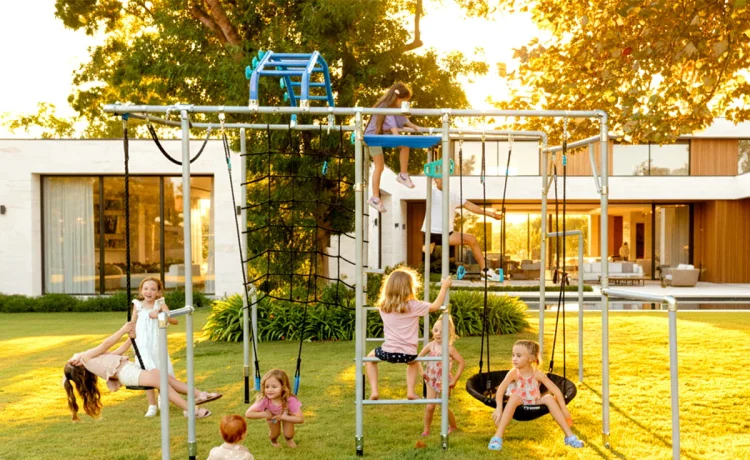
Australian kids spend, on average, far less time outdoors than the generation before them did — a shift most parents notice but few know how to reverse. The good news is that you don’t need a national park in your backyard to fix it. A well-planned play space, even a modest one, can be the difference between kids glued to a screen and kids covered in grass stains by 4pm. Choosing the right mix of backyard play equipment is where that transformation starts, and it’s a decision worth getting right the first time.
Whether you’re starting from scratch with a bare lawn or looking to upgrade a tired old swing set, the options today are far more varied than the standard slippery-dip-and-swing combo most of us grew up with. From imaginative cubby houses to climbing structures that challenge older kids, there’s a way to build a backyard that grows with your family rather than being outgrown within a year or two.
Why Backyard Play Still Matters
There’s a reason paediatricians and educators keep coming back to unstructured outdoor play as a non-negotiable part of childhood development. It builds gross motor skills, teaches risk assessment in a controlled way, and gives kids a mental reset that screen time simply can’t replicate. For younger children, that might mean climbing, balancing, and sliding. For older kids and tweens, it often means something more physically demanding — think obstacle courses, monkey bars, and climbing walls that keep pace with growing confidence and coordination.
The trick for parents is matching the equipment to both the age of the kids using it and the space available. A cramped, poorly planned setup gets abandoned quickly. A thoughtfully designed one becomes the default hangout spot for years.
Starting With the Right Foundation: Slides and Climbing Structures
For younger children, a slide is usually the first piece of equipment that gets real, sustained use. But not all slides are created equal, and the market has moved well beyond the single straight metal chute bolted to a rusting frame. Modular kits now let you combine a slide with a small climbing deck, a fort platform, or a set of monkey bars, which means the same footprint delivers several play experiences rather than just one.
When comparing options, a few practical things are worth checking before you buy:
- Material and UV resistance — Australian sun is brutal on plastic and untreated timber alike, so look for UV-stabilised materials or a hardwood that’s been properly treated for outdoor exposure.
- Height and incline — a slide pitched too steep for younger kids becomes a hazard rather than a feature; check the recommended age range against your child’s actual size and confidence, not just their age in years.
- Ground surface underneath — soft fall matting, rubber mulch, or a thick layer of sand underneath any elevated structure reduces injury risk dramatically and is worth the extra spend.
- Expandability — a slide sold as part of a modular system means you can bolt on a swing, a climbing wall, or a second deck later without starting over.
If you’re weighing up options for this part of the yard, it’s worth browsing a proper range of cubby slide kits rather than settling for whatever’s on the shelf at the first hardware store you visit — the difference in build quality and configuration options is significant once you start comparing side by side.
Designing for the “In-Between” Years
There’s a well-known gap in backyard play equipment: plenty of gear for toddlers, plenty for teenagers wanting a basketball hoop, but not much aimed squarely at the seven-to-twelve age bracket. This is exactly the stage where kids want to test themselves physically — climbing higher, moving faster, being challenged rather than simply entertained.
This is where ninja-style obstacle equipment has become genuinely popular over the past few years, largely off the back of televised obstacle course competitions that captured kids’ imaginations. Rings, cargo nets, balance beams, warped walls, and monkey bar traverses give older kids something that feels like a real physical challenge rather than a baby-ish add-on to the swing set they’ve long since outgrown.
A few things to think through before committing to this kind of setup:
- Progression, not just difficulty — the best layouts let kids start with easier elements and work up to harder ones as strength and confidence build, rather than presenting a single all-or-nothing challenge.
- Landing zones — obstacle-style equipment tends to involve more falls than a standard swing set, so impact-absorbing surfacing isn’t optional here.
- Weather exposure — components like ropes and webbing degrade faster in direct sun and rain than powder-coated steel frames, so check what’s rated for permanent outdoor installation versus what’s designed for occasional or indoor use.
- Supervision sightlines — position any climbing or obstacle structure where you can see it clearly from inside the house, particularly if it’s going to be used by kids without an adult standing right next to it.
For families with kids in this age bracket, it’s worth looking closely at a dedicated ninja warrior playground setup rather than trying to cobble one together from generic gym equipment, since purpose-built ranges are engineered specifically for the loads and movements this kind of play involves.
The Enduring Appeal of the Cubby House
While obstacle courses and slides tend to dominate the “exciting new purchase” conversation, it’s the humble cubby house that often gets the most consistent, long-term use. There’s something about having a space that’s entirely theirs — not a bedroom shared with rules about bedtime, not a lounge room shared with the rest of the household — that kids gravitate towards for years.
Cubby houses have come a long way from a simple timber box with a door cut into the side. Modern designs incorporate:
- Elevated platforms with ladder or stair access, effectively doubling as a small cubby-plus-fort combo
- Working windows and shutters, which matter more to imaginative play than adults often expect
- Chalkboard panels, sand pits, or small kitchen-play add-ons for younger siblings
- Weatherproof roofing that means the structure doesn’t need to be rebuilt after two Australian summers
One thing that’s easy to overlook is how a cubby house interacts with the rest of the yard as kids get older. A structure built purely for a four-year-old’s imaginative play often gets abandoned by age nine or ten. Better-designed options anticipate this by including features — a small loft, a reading nook, a sturdy enough frame to later attach a rope swing — that keep the structure relevant well past the age most parents expect to retire it.
If you’re weighing up this part of the backyard plan, it’s worth spending time comparing a solid range of cubbies before deciding, since the gap between a basic flat-pack box and a properly engineered structure shows up quickly in how long it actually lasts outdoors.
Getting the Layout Right
Even the best individual pieces of equipment underperform if the layout doesn’t work. A few practical layout principles apply regardless of which specific products you choose:
- Leave clear fall zones. Any elevated equipment needs at least 1.8–2 metres of clear, soft-surfaced space around it, more if there’s a slide or swing with forward momentum involved.
- Zone by activity, not just by age. High-energy equipment (slides, obstacles, swings) works best grouped together, away from quieter zones like a cubby house or sandpit, so younger kids playing calmly aren’t in the path of an older sibling moving at speed.
- Think about sun and shade across the day, not just at the time you happen to be doing the measuring. A shade sail or well-placed tree can extend the usable hours of a play space significantly through an Australian summer.
- Plan for supervision, not just aesthetics. The most beautifully designed backyard is only as good as your ability to actually see what’s happening in it from the kitchen window or back deck.
Budgeting and Staging the Build
Very few families install everything at once, and there’s a reasonable argument for not trying to. Staging a backyard play area — starting with the piece that will get the most immediate use, then adding a second and third element over subsequent seasons — spreads cost and lets you learn how your kids actually use the space before committing further.
A practical staging order for many families looks like this:
- Start with whichever piece matches your children’s current age and interests most directly — often a slide-based structure for younger children, or an obstacle-style setup for kids already past the toddler stage.
- Add a cubby house once the family has settled into using the first structure regularly, since it tends to complement rather than compete with active-play equipment.
- Round out the space with connecting elements — monkey bars, a rope bridge, a second smaller platform — once you can see how the kids naturally move between zones.
This staged approach also gives you time to properly prepare the ground surface for each addition rather than trying to landscape an entire backyard in one exhausting weekend.
Conclusion
A backyard built around genuinely well-considered play equipment does more than fill idle afternoons — it becomes the default setting for childhood in a way that’s hard to manufacture indoors. The families who get the most long-term value out of their investment tend to be the ones who think beyond the first purchase: matching equipment to the specific age and stage of their kids, planning the layout with sightlines and safety in mind, and choosing structures built to last through actual Australian weather rather than a single mild season.
There’s no single “correct” backyard setup, and what works brilliantly for one family’s yard and kids might be entirely wrong for another’s. But the underlying principles hold regardless of size or budget: prioritise quality and safety over the cheapest option, plan for how your children will use the space in two or three years rather than just today, and build in stages if that’s what the budget and the yard both call for. Get those fundamentals right, and the backyard becomes exactly what it should be — the place the kids actually want to be.